


Natural Looking Rhinoplasty
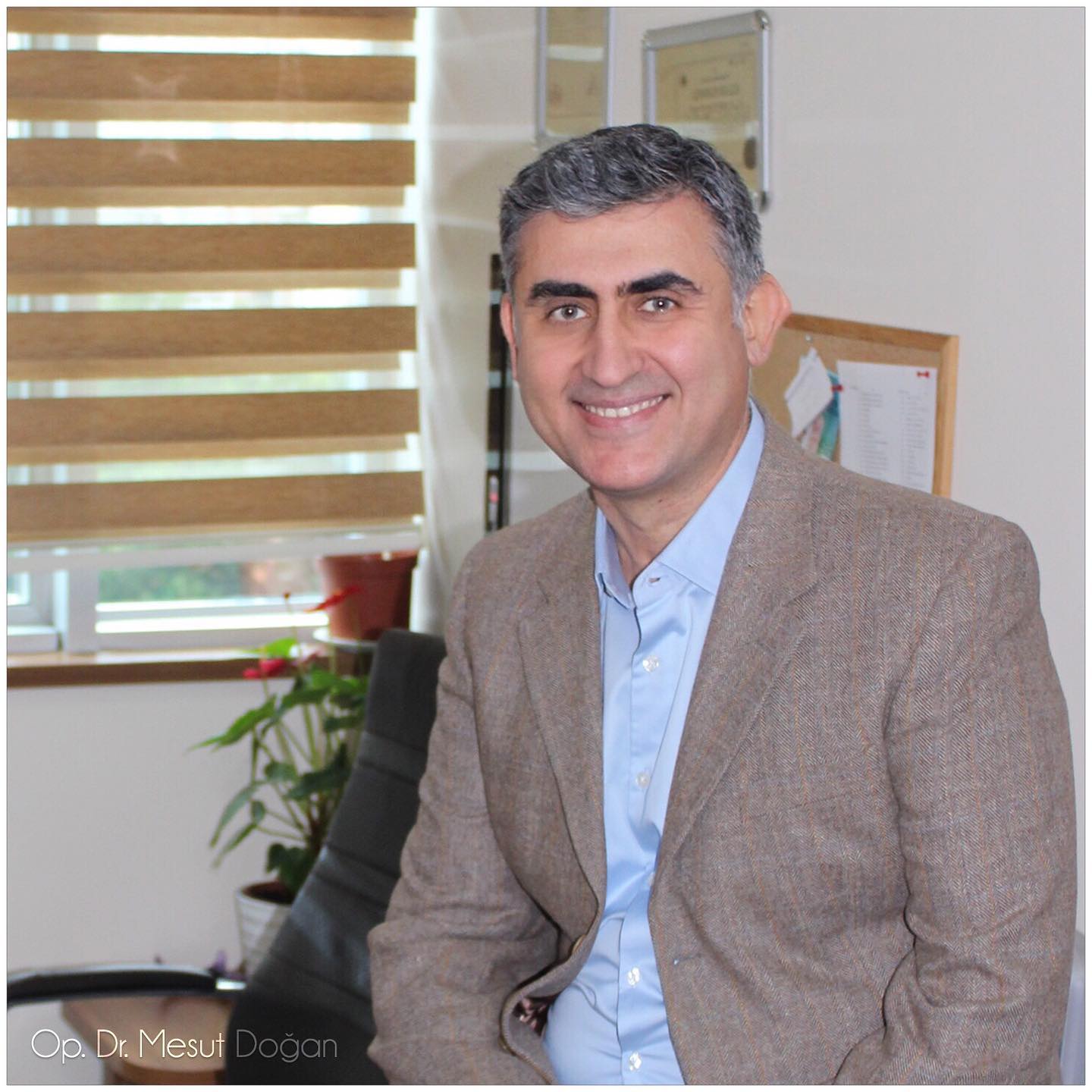
Performed by Dr. Mesut Doğan at a fully-equipped private hospital in Istanbul.
- What Does Natural-Looking Mean?
- Why Does Rhinoplasty Look Unnatural?
- The Foundation of a Natural Result: Proportion Planning
- Techniques That Support a Natural Outcome
- Thick Skin and Natural Results
- The Surgical Process
- Recovery and When the Natural Result Appears
- Surgeon’s Perspective
- Pricing Information
- Frequently Asked Questions
What Does Natural-Looking Rhinoplasty Mean?
Natural-looking rhinoplasty is not a specific procedure — it is a planning and surgical philosophy. The goal is a result that does not appear artificial or “done”, but instead looks harmonious and proportionate to the patient’s own face. The most common concern patients bring to a rhinoplasty consultation is the fear of looking operated on. That concern is entirely valid: a poorly planned rhinoplasty can look unnatural even when technically well executed. Whether the result looks natural depends less on surgical technique and more on the starting point of the plan. The correct reference point is the patient’s own facial proportions — not a universal ideal. For an overview of all rhinoplasty techniques, visit our Rhinoplasty page.
Why Does Rhinoplasty Look Unnatural?
Unnatural rhinoplasty results almost always stem from the same planning errors. Understanding these errors also explains what makes a natural-looking result possible.
When the nose is reduced beyond what the facial proportions allow, it becomes disproportionate to the surrounding features. An overly small tip or an excessively concave dorsum makes the result look operated on immediately.
A tip rotated further upward than the face warrants — particularly in male patients — is one of the most recognisable signs of an operated nose. The rotation angle must correspond to the patient’s facial proportions.
A dorsum scooped out beyond its natural proportion — sometimes called a ski-slope deformity — conflicts with the surrounding facial features and creates an immediately artificial impression.
When another person’s nose or a specific aesthetic ideal is used as a template, that ideal may not suit the patient’s facial structure. The result is technically correct but not harmonious with the face it belongs to.
Applying the aesthetic norms of one ethnic group to the facial structure of another creates a conflict with the face. For a natural result, ethnic proportions must serve as the primary reference.
Overly aggressive cartilage resection on thick nasal skin can produce irregular or unexpected surface contours. Skin thickness must always be part of the surgical plan.
The Foundation of a Natural Result: Proportion Planning
A natural-looking rhinoplasty result begins with correct proportion planning. This means surgical targets — dorsal height, tip projection and rotation, alar base width — are not defined in millimetres but as proportions derived from the patient’s own facial measurements.
The key to a natural-looking rhinoplasty result is straightforward: the nose looks like it belongs to that face. This means surgical goals are derived from the patient’s forehead, cheekbones, chin, and overall facial structure — not from an ideal or another person’s nose.
Key Proportion References
- Dorsal height: Should create an unobtrusive transition with the forehead profile.
- Tip projection: Planned in proportion to chin projection.
- Tip rotation: 90–95 degrees in men, 95–105 degrees in women as general guidance — the individual facial profile is always the primary reference.
- Alar base width: Guided by interpupillary distance and individual facial proportions.
Techniques That Support a Natural Outcome
Certain surgical techniques are associated with natural-looking rhinoplasty results because they prioritise structural preservation and precise refinement over aggressive reduction.
The ligamentous structures and structural integrity of the nasal dorsum are preserved; tissue is reshaped rather than removed. Because the natural nasal tissue remains largely in place, the result looks more natural and the healing process is more predictable.
Dorsal height is lowered as a unit rather than by piecemeal hump reduction. This approach produces a smoother, more naturally flowing dorsal profile.
Enables precise and controlled bone shaping. Less tissue trauma means a more predictable healing process and more natural contour transitions.
Cartilage grafts placed to support and shape the nasal tip provide lasting structural support that neither collapses nor shifts over time. Critical for a long-term natural result.
Keeping the amount of cartilage and bone removed to the necessary minimum reduces the risk of over-reduction and the artificial appearance that follows. “Taking less” is often the better strategy in rhinoplasty.
Using sutures rather than resection to reshape tip cartilage repositions tissue without removing it. The result is more predictable and the healing process more controlled.
Thick Skin and Natural Results
Thick nasal skin presents both a challenge and an advantage for natural-looking rhinoplasty. The challenge: thick skin limits how visibly structural refinements express themselves at the surface — particularly at the tip. The fine contour aimed for may not fully translate through the skin.
The advantage: thick skin conceals the underlying structural changes to some degree — camouflaging minor irregularities and producing a smoother surface. For patients with thick skin, realistic expectation management is the single most important factor for a satisfying natural result. This is discussed openly and honestly in every consultation.
Would you like a more harmonious nose without looking like you have had surgery?
Book a one-to-one consultation with Dr. Doğan.The Surgical Process
Natural-looking rhinoplasty is performed under general anaesthesia at a fully-equipped private hospital in Istanbul. Surgery typically takes two to three hours depending on the scope of corrections planned. The consultation includes a detailed facial proportion analysis; the surgical target is established from the patient’s own facial measurements, and a personalised operative plan is prepared accordingly.
The choice of technique — open or closed, preservation or conventional, piezo or standard osteotomy — is guided by anatomical requirements, not by the goal of “looking natural”. A natural result is the product of correct planning, not of any particular technique. Most patients are discharged the following morning.
Recovery and When the Natural Result Appears
Realistic expectation management during recovery is especially important with natural-looking rhinoplasty. The nose in the first weeks and months does not reflect the final result. Swelling, cartilage elasticity, and skin adaptation all shape the final appearance — and each resolves over time.
1
The cast is removed on day 6 or 7. The appearance at this stage does not reflect the final result; swelling remains significant. It does, however, give a first sense of the general direction of the outcome.
1
Visible bruising has resolved. Remaining swelling is no longer noticeable from the outside. Those around the patient may sense a change but cannot identify what was done — an early indicator of a natural result.
3
The majority of swelling has resolved. The general contours of the outcome are becoming clear. Many patients begin receiving positive feedback from those around them about their natural appearance during this period.
Months
Residual tip swelling resolves completely; the final natural appearance emerges. In patients with thick skin, this process may extend to 18 months. Structural changes are permanent.
Surgeon’s Perspective: Natural is a Plan, Not a Technique
Patients tell me very often: “I want to look natural.” That is one of the most useful things a patient can say — but knowing what you want and knowing how to achieve it are two different things. A natural-looking rhinoplasty result is not produced by selecting a particular technique. It is produced by aligning the surgical goals with the correct reference point.
In every consultation I ask the same question: what is the right nose for this face? That question does not produce an answer in millimetres. I analyse the forehead profile, the structure of the cheekbones, the position of the chin, the overall facial proportions — and I derive a target from those measurements. Only then is the plan built around that target.
The majority of noses that look operated on are the product of technically successful procedures. The surgeon applied the technique correctly, but began the plan from the wrong reference point. Over-reduction, excessive rotation, ignoring ethnic characteristics — these are all wrong-reference-point problems. No matter how precise the technique, a plan that starts from the wrong reference cannot produce a natural-looking result.
Pricing Information
Natural-looking rhinoplasty is priced according to the techniques applied and the scope of corrections required — it is not a separate pricing category. The surgical fee covers the procedure, anaesthesia, and hospital accommodation. For detailed pricing specific to your anatomy and planned corrections, we recommend booking a consultation.
Frequently Asked Questions
Preservation rhinoplasty is one of the approaches most closely aligned with achieving a natural result. Learn more about preservation rhinoplasty.
Preservation RhinoplastyFor precise bone shaping and reduced tissue trauma — learn more about piezo ultrasonic technology.
Ultrasonic Piezo RhinoplastyWant to preserve your ethnic features while achieving a natural result? Learn more about ethnic rhinoplasty.
Ethnic RhinoplastyThe information on this page is intended for general informational purposes only and does not constitute medical advice. Individual suitability depends on factors that can only be assessed through a personal consultation. Results vary from patient to patient.
