


Large and Long Nose Aesthetics in Turkey
What Is Large and Long Nose Rhinoplasty & Why Have It in Turkey?
Large and long nose rhinoplasty is a surgical procedure designed to reduce the overall size and projection of the nose, bringing its dimensions into better proportion with the surrounding facial features. It addresses noses that are disproportionately wide, tall, or elongated relative to the forehead, cheekbones, and chin, where the imbalance is structural rather than limited to a single feature like the tip or bridge alone.
This is among the more technically demanding categories of rhinoplasty. An oversized nose rarely presents as a single isolated excess. It typically involves a combination of a broad or humped dorsum, a long or drooping tip, wide nostrils, and thick overlying skin that resists showing the refined structure beneath it. Addressing all of these components in a coordinated way, while maintaining structural integrity and natural-looking proportions, requires a level of planning and surgical experience that goes well beyond straightforward tip or bridge work.
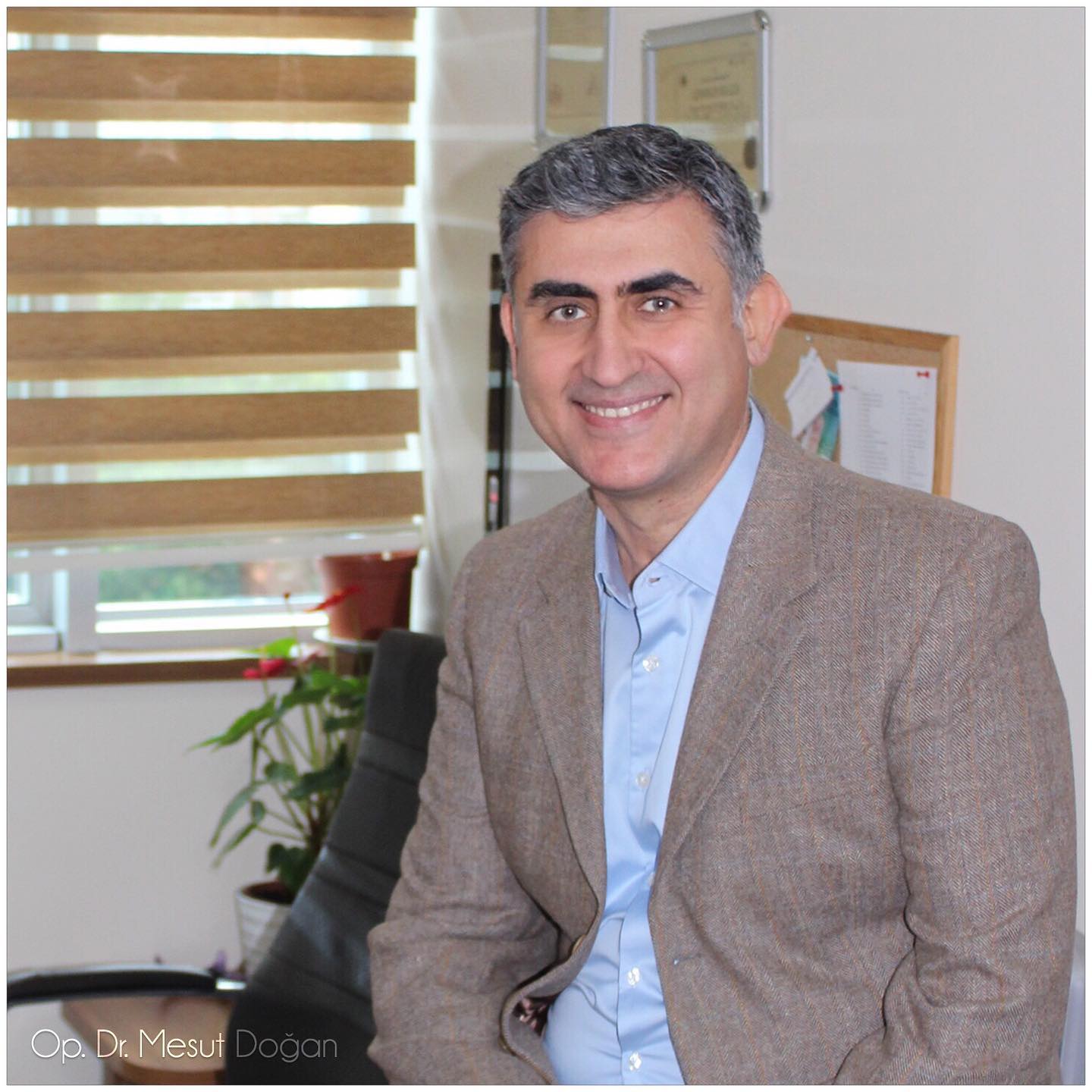
For patients in the UK, Istanbul has become the leading destination for this type of complex rhinoplasty. Surgeons at accredited Istanbul hospitals perform significantly higher annual case volumes than their counterparts at UK private hospitals, building the kind of specialised experience that complex nose reduction cases demand. Dr. Dogan at Private Aile Hospital in Istanbul performs large nose rhinoplasty at approximately half the London equivalent cost, with no reduction in surgical standard or technology.
For a broader overview of rhinoplasty approaches available in Istanbul, see our Rhinoplasty in Turkey page.
Understanding the Anatomy: What Makes a Nose Large or Long?
The perception of a nose as large or long is rarely attributable to a single anatomical feature. In most cases, it reflects a combination of structural characteristics that collectively overwhelm the proportions of the face. Understanding which components contribute to the appearance guides the surgical plan.
An overly prominent nasal bridge, with or without a dorsal hump, adds height and projects the nose forward beyond its ideal profile position.
A tip that sits too far forward from the face or points downward lengthens the apparent profile of the nose and draws disproportionate visual attention.
An elongated columella, the strip of tissue between the nostrils, increases the vertical height of the nose and contributes to a drooping or stretched appearance.
Nostrils that are wider than the distance between the inner corners of the eyes contribute to a visually heavy nasal base that increases the overall perceived size.
Thick nasal skin covers and conceals the underlying cartilage framework, limiting how much refinement is visible on the surface and requiring specific surgical strategy.
Broad nasal bones widen the upper third of the nose and are typically addressed through osteotomies to narrow the dorsal width in proportion to the rest of the face.
An accurate pre-operative assessment identifies which of these components are present and in what combination. The surgical plan for a long nose with a drooping tip and thick skin is structurally different from that for a large nose with a broad dorsum and wide alar base, even though both fall under the same general category.
Your Surgical Journey in Istanbul
Large and long nose rhinoplasty is performed under general anaesthesia at Private Aile Hospital in Istanbul, typically lasting between two and a half and three and a half hours depending on the number and complexity of structural corrections required. For London-based patients, the surgical plan is completed at your pre-operative consultation in London, so every aspect of the procedure is established before you travel.
Most large nose reductions are performed using the open rhinoplasty technique, which provides the direct visualisation needed to address multiple structural components simultaneously. The procedure begins with controlled reduction of the nasal dorsum, lowering the bridge height to the planned level. Osteotomies are then performed to narrow the nasal bones and close the open roof created by dorsal reduction, bringing the upper third into proportion.
Attention then turns to the tip. Depending on the anatomy, this involves repositioning, suturing, and sometimes partial resection of the lower lateral cartilages to reduce tip projection and achieve the desired rotation. Where the columella is elongated, it is shortened to reduce the vertical height of the nose. Alar base reduction, if required, is performed last to address nostril width in proportion to the refined structure above.
Throughout the procedure, each correction is calibrated against the others. Reducing dorsal height changes how the tip appears in profile. Rotating the tip changes how the alar base width reads. These interdependencies are what make large nose rhinoplasty technically demanding and why the integration of all components into a single coherent plan is essential.
The incisions are closed with fine sutures, a nasal splint is applied, and the patient moves to recovery. Most patients are discharged the following morning. Post-operative follow-ups are conducted in London.
The Thick Skin Challenge in Large Nose Rhinoplasty
Thick nasal skin is among the most significant variables in large nose rhinoplasty, and it is also one of the least discussed honestly in the information patients receive before surgery. The skin envelope of the nose determines how much of the refined cartilage structure beneath it is visible on the surface. In patients with thin skin, even subtle refinements show clearly. In patients with thick skin, the skin resists conforming to the new framework, and the refinement achieved at the cartilage level may not translate fully to surface appearance.
This matters most in the nasal tip, where thick skin can mask tip definition even after precise cartilage work. Managing thick skin requires a combination of targeted soft tissue reduction at the tip, conservative structural framework adjustments that allow the skin to contract over time, and realistic communication with the patient about the timeline for visible improvement.
Final results in thick-skin patients take longer to become fully apparent, typically twelve to eighteen months or more, as the skin gradually adapts to the new framework underneath. Understanding this before surgery is not a reason to avoid the procedure. It is a reason to choose a surgeon with documented experience in thick-skin cases and to approach the recovery timeline with appropriate patience.
Concerned about thick skin or complex nose reduction?
Discuss your anatomy with Dr. Dogan in person. London consultation available.Recovery After Large and Long Nose Rhinoplasty: A Realistic Timeline
Recovery from large nose rhinoplasty follows the same general progression as other rhinoplasty procedures, with the extent of swelling broadly proportional to the scope of the corrections performed. More extensive structural work typically produces more visible initial swelling, which resolves progressively over the following weeks and months.
1–3
Swelling and bruising around the eyes and nose peak within 48 to 72 hours. Keeping the head elevated reduces fluid accumulation. Cold compresses and prescribed pain relief manage discomfort effectively at this stage.
1
The external nasal splint is removed at the end of week one, before your return to London. The new nasal shape becomes visible for the first time, though significant swelling remains. Return to desk-based work is typically possible by day seven to ten.
2–4
The majority of visible bruising resolves. Residual swelling is present but largely undetectable to anyone who did not know the pre-operative appearance. Social activities resume comfortably during this window.
6
Physical activity resumes with appropriate precautions. The nose looks close to its final result in profile and from the front. A second London follow-up appointment is scheduled around this milestone.
mo
Full resolution of tip swelling reveals the final outcome. In thick-skin patients, this timeline may extend to eighteen months or beyond as the skin gradually adapts to the refined underlying framework. The patience required is directly proportional to the improvement achieved.
Expert Perspective: Planning for Proportional Results
The most important concept in large nose rhinoplasty is proportion, not reduction. The goal is not to make the nose as small as possible. It is to bring the nose into balance with the specific facial structure of that individual patient. A result that looks natural on one face would look operated on another. Every measurement and every structural decision is made in relation to the unique proportions of the patient sitting in front of me, not against an idealised template.
Large noses are rarely uniform in their excess. Most patients present with a specific combination of a prominent dorsum, a long or drooping tip, thick skin, and width in the alar base. Each of these requires a different surgical manoeuvre, and the manoeuvres interact with each other in ways that must be accounted for in the planning. Lowering the dorsum changes how the tip reads in profile. Rotating the tip changes how the alar base width appears. These are not separate decisions; they are a single integrated plan.
For patients with thick skin, the honest conversation centres on what the skin will reveal and on what timeline. Thick skin limits the surface expression of cartilage refinement, particularly at the tip. The result is still meaningful and real, but the timeline for appreciating it is longer. Patients who understand this from the outset approach their recovery with appropriate patience and are consistently more satisfied with the final outcome.
Is Large Nose Rhinoplasty Safe in Turkey?
Turkey is one of the most established destinations internationally for complex rhinoplasty, including large nose reduction. Accredited hospitals in Istanbul operate to Western European standards in anaesthetic protocols, surgical facility quality, and post-operative monitoring. Surgeons at these centres complete residency training equivalent to UK ENT and plastic surgery programmes, with many holding additional international fellowship qualifications in rhinoplasty specifically.
For complex procedures such as large nose rhinoplasty, the safety considerations extend beyond the facility level to the individual surgeon’s experience with this specific category of case. Complex nose reduction, particularly in thick-skin patients or cases requiring multiple simultaneous corrections, demands a surgeon whose case history includes a significant volume of comparable presentations.
For London-based patients, the pre-operative consultation with Dr. Dogan takes place in your own city before any commitment to travel is made. The clinical assessment, imaging review, and surgical planning are completed at that appointment, ensuring that both surgeon and patient enter the procedure with a thorough mutual understanding of the anatomy and the plan.
Large Nose Rhinoplasty Cost: Turkey vs. London
Large and long nose rhinoplasty with Dr. Dogan at Private Aile Hospital in Istanbul is priced at approximately half the London equivalent for a procedure of comparable complexity. The surgical fee includes hospital accommodation. The cost difference reflects Turkey’s lower operational overheads, not a difference in surgical standard, technology, or patient care.
For a detailed cost estimate based on your specific anatomy and the corrections required, this is best discussed during your London consultation.
Frequently Asked Questions
Large nose correction typically requires the open rhinoplasty approach. Read our detailed guide.
Open Rhinoplasty in TurkeyLarge nose rhinoplasty often overlaps with ethnic rhinoplasty concerns. Read our ethnic rhinoplasty guide.
Ethnic Rhinoplasty in TurkeyComplex large nose cases sometimes follow previous surgery. Read our revision rhinoplasty guide.
Revision Rhinoplasty in TurkeyThe information on this page is provided for general informational purposes and does not constitute medical advice. Individual suitability for large and long nose rhinoplasty depends on factors that can only be assessed through a personal consultation. Outcomes vary between patients.
